Traditional Full Facelift
A traditional facelift (Rhytidectomy) was our only option years ago, but with all the new advancements in medicine and technology, face-lifting procedures have become more individualized and now allow patients more options for facial rejuvenation. Here we will discuss the traditional full face-lift. However, a consultation with one of Premier’s Board Certified Facial Plastic Surgeons is paramount in deciding if a full facelift is optimal for you.

Facelift – Dr. Louis DeJoseph, Atlanta GA

Facelift Overview
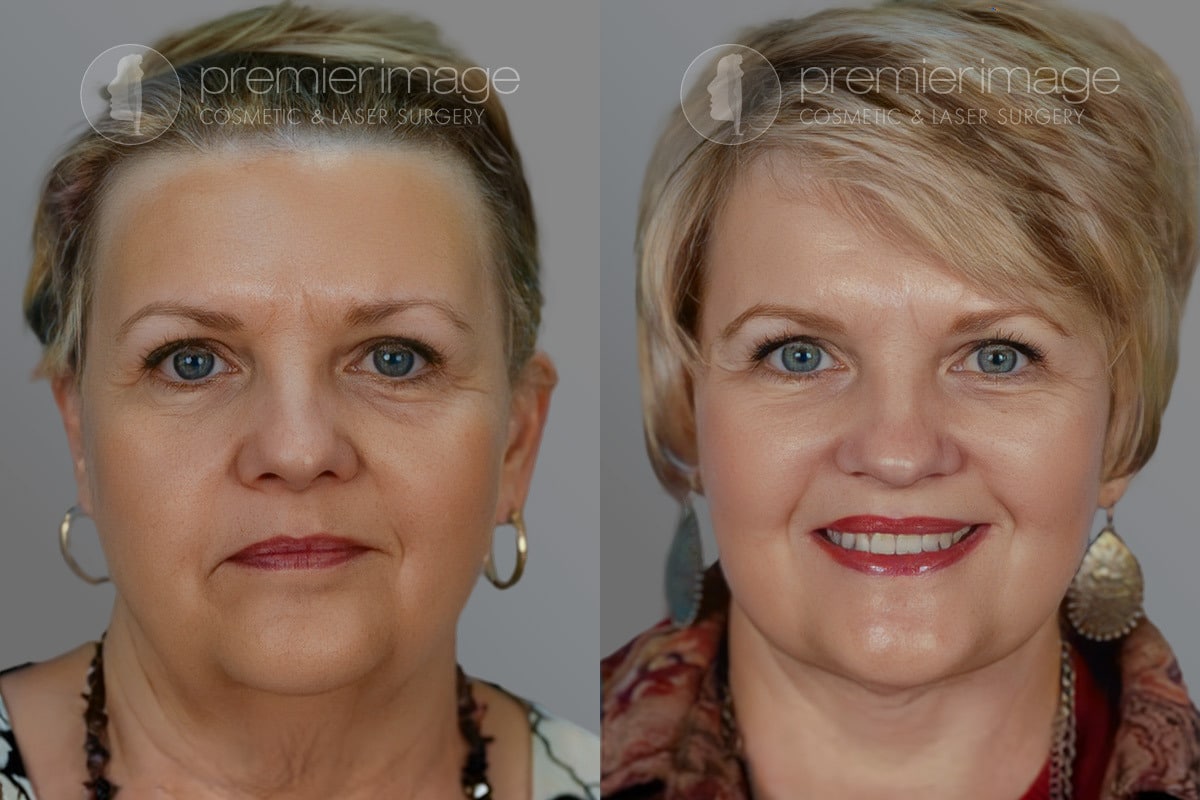
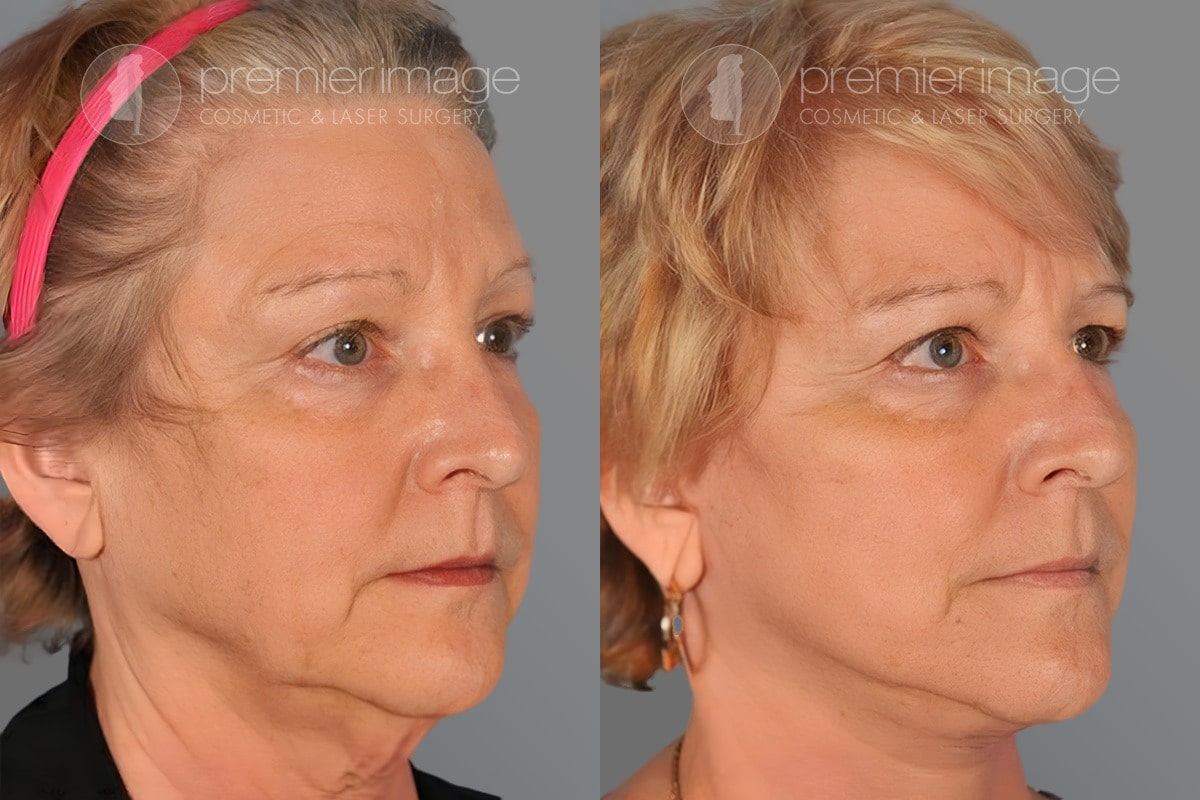
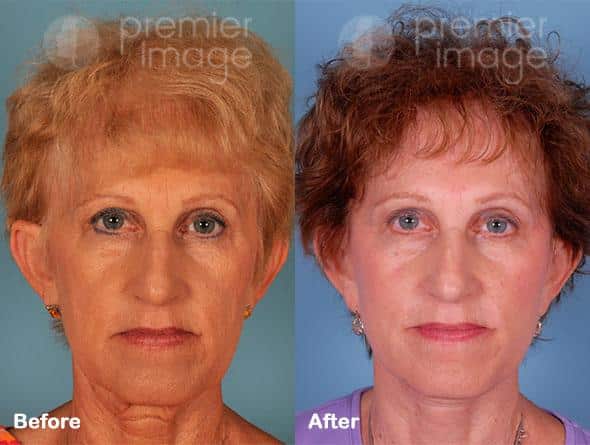
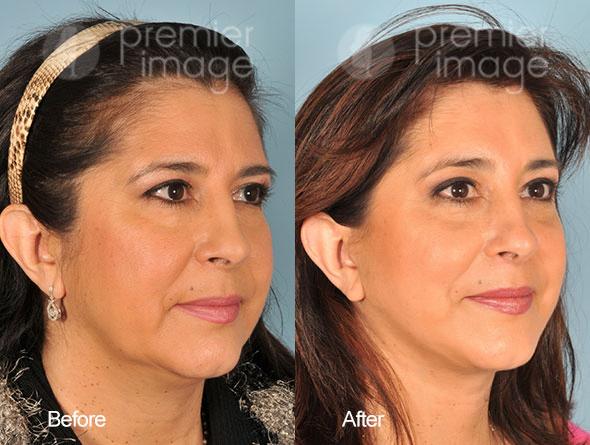
A traditional full facelift (Rhytidectomy) will not stop the aging process, but it can set back your clock by improving the most visible signs of aging such as skin laxity. Removing excess fat, tightening underlying muscles, and re-draping the skin of your face and neck will take you back 10 to 20 years. A facelift can be done alone or in conjunction with other procedures such as a forehead lift, eyelid lift surgery, facelift, or nose reshaping.

The Facelift Procedure
Doctor DeJoseph has extensive experience performing facelifting procedure, performing over 200 facelifts and over 2500 facial procedures per year.
He begins the incision in the area of the temple hair above the ear. This provides more lift to the cheek area, restoring what gravity has pulled down, and gives a more natural appearance rather than a pulled or stretched look.
Seamless Face-Lift Incisions by Dr. DeJoseph
The incision continues down in a natural line in front of the ear (or just inside the cartilage at the front of the ear), and then continues around the earlobe, circling behind but remaining in the crease of the ear, and finally sweeps back into the hairline.
The tiny suture material combined with the experienced hands and advanced techniques of Dr. DeJoseph allows for a completely camouflaged suture line. “Much of the suturing is done inside,” says Dr. DeJoseph “This provides for longevity of the face-lift and allows us to individualize the lift according to the patient’s needs.”
The amount of undermining naturally varies from patient to patient. Many patients think you go from the consultation with Dr. DeJoseph to the operating room, but this is not the case at Premier Image Cosmetic & Laser Surgery. Even though the consultation is in-depth with careful evaluation and diagnosis provided, the patient will return for a second evaluation or what we call the pre-operative appointment. We do this to review the patient’s history, medications, EKG, and blood work. “It’s what we call an ‘H & P’, or History and Physical,” says Dr. DeJoseph.
“Safety is top of mind, and it gives us an opportunity to sit down and review the photo imaging done during the initial consultation. It also allows the patient to ask more questions about the procedure and address any concerns.”
Facelift Techniques
Deep Plane Facelift
The deep plane facelift is an advanced technique that targets the deeper facial structures for rejuvenation. Unlike traditional methods, it involves repositioning the muscles and tissues beneath the skin, offering a more natural and lasting improvement. This technique is particularly effective in addressing sagging in the mid-face and neck areas, providing a comprehensive facial rejuvenation. Ideal for those seeking significant yet natural-looking results, the deep plane facelift can be a transformative option in facial plastic surgery.
Facelift Pre-Operative Instructions
The morning of the surgery and during the pre-operative preparation, Doctor DeJoseph marks the face with a marking pen. The exact design of the planned incisions will vary with each patient according to the amount of skin excision, direction of pull, and so forth.
“We review the patient’s photographs the evening prior to the surgery for planning, but the morning of surgery, during the pre-operative preparation, the patient is marked while he/she is sitting up,” says Dr. DeJoseph. “The patient will be supine or lying down during the surgery; however, our exact design will still be in place.”
“The goal here is to restore a very natural look,” says Dr. DeJoseph. “The direction of pull depends on the deformity that is to be corrected in the individual patient. Planning of the surgery begins at the consultation and continues through the pre-operative appointment, to the night before the procedure, and finally, the morning of the surgery.”
Facelift Care & Recovery
At Premier Image Cosmetic & Laser Surgery, we pride ourselves on using only board-certified doctors of anesthesia and a nursing staff not only chosen for their expertise and certifications, but for their caring attitudes as well.
Dr. DeJoseph performs facelifts at Northside Advanced Surgery Center Perimeter in state-of-the-art operating rooms with a skilled and friendly Northside Hospital surgical staff.
Following the facelift procedure, patients should follow all post-operative instructions they are given. Doctor DeJoseph applies a dressing to be worn overnight to protect the entire area where the incisions have been made. Though discomfort should be fairly minimal, pain medication will be prescribed to help keep patients feeling comfortable throughout the recovery period. This will be removed on the morning following your face-lift. Swelling is a normal part of the recovery process, and patients should try to sleep with their heads elevated to reduce the amount of swelling. Facelift patients should also avoid turning the neck as much as possible as this causes pulling on the healing tissues. Some numbness can also be expected during the first few weeks.
Most patients can return to work in about 10 days, but some activities will need to be postponed for a minimum of two weeks after surgery, including bending, lifting, and exercise. Saunas, hot hair styling tools, and steam rooms should not be used for at least two months following face-lift surgery. Following postoperative instructions carefully will help avoid complications and enhance overall facelift results.
Medications are prescribed by Dr. DeJoseph to ensure that your comfort is maintained.
Patient Reviews
-

- LisaATL
Related articles
Why Choose Dr. DeJoseph
Dr. DeJoseph received his undergraduate degree in Molecular Biology, graduating Cum Laude in his class at King’s College. Subsequently, he received his doctorate of medicine from the College of Medicine at Penn State.
Dr. DeJoseph completed his residency in Otolaryngology/Head & Neck Surgery at Case Western Reserve University in Cleveland, Ohio and was one of only 38 surgeons selected worldwide to undergo further specialty training in facial plastic & reconstructive surgery in affiliation with Emory University here in Atlanta, Georgia.
Dr. DeJoseph is triple board certified in facial plastic & reconstructive surgery & laser surgery. He is a frequent lecturer to professional and civic groups, contributing author, and winner of many academic awards.
DeJoseph serves on many local and national committees and is an active medical staff member at Emory Dunwoody Hospital, Northside Hospital, Grady Hospital, and North Fulton Hospital.
Dr. DeJoseph remains active and raises funds or UNICEF, American Breast Cancer, Aids Foundation, American Breast Cancer Society, the Leukemia & Lymphoma Foundation, and the American Heart Association.
Related Procedures: Blepharoplasty, Otoplasty, Neck Lift, Brow lift, Hair Transplant
About Dr Louis M. DeJoseph
Louis M. DeJoseph, M.D. joined Premier Image Cosmetic & Laser Surgery in September of 2002 bringing with him the credentials, experience, and specialty training in facial plastic and reconstructive surgery. Dr. DeJoseph’s well sought after talents and exceptional medical skills were not over looked by any means as he was soon asked to become a full partner in the practice.
Dr. DeJoseph received his undergraduate degree in Molecular Biology, graduating Cum Laude in his competitive class at King’s College. Subsequently he received his doctorate of medicine from the College of Medicine at Penn State. Dr. DeJoseph completed his residency in Otolaryngology/Head & Neck Surgery at Case Western Reserve University in Cleveland, Ohio and was one of only 38 surgeons selected worldwide to undergo further specialty training in facial plastic & reconstructive surgery in affiliation with Emory University here in Atlanta, Georgia.